We are currently in one the worst investment bubbles since the Dutch went crazy over tulip bulbs from 1634 to 1637!
All the major players – tech companies, investors, venture capitalists, commercial real estate developers, consulting companies and the media – are buying into the story and continue to talk up AI being the next great industrial revolution.
This would be funny if it didn’t go hand-in-hand with the biggest and most destructive misallocation of capital in a very long time, or possibly ever. Supposedly somewhere between US$1 and 3 trillion is going to be spent on AI data centres between now and 2030, depending on which announcements we are to take seriously.
That this is both a scam on investors and a giant Ponzi scheme is without doubt. You wouldn’t have to change the stock market rules as is currently happening, other than to maintain the illusion that AI investments will pay off.
As outlined in Fortune, “To get into the S&P 500, a company is supposed to make some money. The sum of its four quarters of earnings has to be positive—at least GAAP wise—and so does its most recent quarter.” That’s a pretty basic rule and decades old.
Breaking this rule, which has now been done, was to not only aid SpaceX to go public but also, OpenAI and Anthropic. None of those companies make money. SpaceX’s valuation of US$1.75 TRILLION was solely based on AI, which the prospectus mentions 1,250 times! Violating these old listing rules is about capturing index fund investment and access to trillions of dollars of institutional retirement funds. Where SpaceX, OpenAI and Anthropic are going, others will follow.

Once the old rules have been broken, the old investor protections will be gone. This will enable more fraud and deception.
That profitability is just around the corner is equally deceptive. OpenAI made a net loss of over US$60 billion in 2025, compared to revenues of US$13 billion. Its financials are getting worse, not better, hence the recent move to token-based charging for corporate users.
The way to keep the illusion going is for OpenAI, Anthropic and their hyperscaler partners (Google, Microsoft, Amazon, Oracle) is to maintain the need to invest in the data centre infrastructure whilst massively subsidising the cost of accessing these models to keep users hooked.
The whole charade is being justified with stories of incredible ‘progress’ (AI will cure cancer and solve the climate crisis) while simultaneously showering us with warnings that AI is already massively powerful. Which basically means when it all collapses in a heap, we the AI boosters were upfront about the problems it might create, so you can sue us like you did big tobacco.
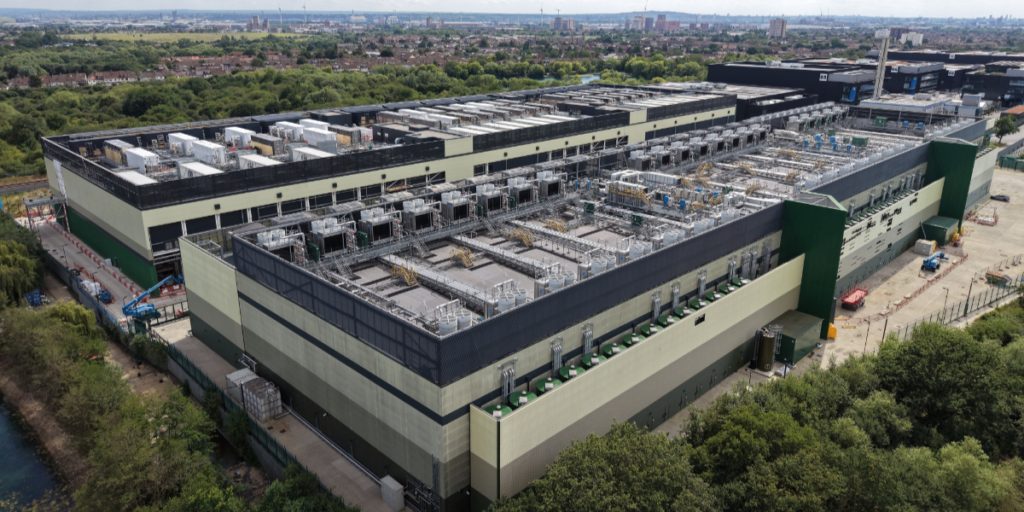
The desire of a small number of people to get filthy rich before the reality kicks in and the AI bubble bursts, is the real driver of the data centre boom. Most of these data centres won’t be built and, even if the boxes are built, they will never be fitted out and start running.
The thing is that if all the data centres currently announced and in development were actually in operation, there wouldn’t be enough energy in the grid to power them or water to cool them.
The numbers are truly staggering. One of the companies tracking AI investment writes: “As of early 2026, 190 GW of hyperscale data center capacity has been announced across 777 projects. This includes ~148 GW planned, ~21 GW in construction, and ~12 GW already operational. Global data center electricity consumption is projected to more than double by 2030 [to more than 1000TWh], and in the U.S., data centers will soon consume more electricity than all energy-intensive manufacturing combined.”
For comparison, the UK consumes around 320 TWh a year and Australia around 280TWh. The idea that additional electricity generation of 1,000TWh can be supplied is not just fanciful, it is idiotic. The number of power plants, sub stations and transmission lines that would have to be built in less than 4 years is in the many hundreds, yet the average construction time (that means the time AFTER all permits have been granted) is 4 years for thermal power and 2 years for renewables. Renewables alone are unable to power AI data centres, which need to run 24/7 and at peak capacity for prolonged periods (during model training).
But even if renewables can’t power AI centres, demanding companies build their own solar and battery plants next to the centres they are planning may be the way to highlight that these will never happen. When you add that data centres also need outrageous amounts of water for cooling, companies who want them must be forced to build at the coast to fund and build their own desalination plants.
This mismatch is why most of these data centres will never be built, or if the boxes are built (a relatively cheap and easy way to maintain the illusion), they will never be fitted out and become operational.
Everyone jumping onto the bandwagon and announcing yet more data centre projects is only about maintaining the bubble until the AI companies can be listed and people can walk away as billionaires and a few possibly trillionaires.
So pity the poor buggers who got shafted by having actual data centres go into operation in their vicinity. The data centres that are currently being built are in locations where existing land and power prices are cheap, and electricity substation connections are available, which usually means close to residential areas. One egregious example is Henrico County in Virginia, where power prices have gone up 25% for government and school facilities on July 1. Why? Because Henrico County already has 37 data centres and there are plans to build 17 more!
No wonder local communities have had enough already, and protests are taking place all over the US. At present though, the corporations that are pushing the investment bubble are influencing government and regulators and, in too many cases, have been successful in overturning local bans or objections. The level of opposition will have to increase steadily to shift the balance of power.
The one good thing is the boom has little chance of playing out fully. The needed capacities for power plant construction and data centre construction simply no longer exist in the West. Ultimately the boom will turn to bust, and taxpayers will be left to pick up the tab to deal with basically worthless finished or unfinished data centres.
Our current reading is that the ones running the scam will do everything in their power to extend the bubble to the point where they are able to walk away with billions. OpenAI and Anthropic are both targeting to go public this year, probably because the bubble is already running out of steam and there has been literally zero progress in getting the current crop of models closer to AGI or replacing workers. They are far to error prone for the latter and lack any understanding of the world to ever achieve the former.
As this realisation is spreading beyond a handful of experts, doubts over the viability of the investment are going to become widespread and investors and banks will demand better terms/collateral before pulling their funding entirely.
At the point bubble pops, we will collectively be left immensely poorer, saddled with innumerable white elephants and have a severe cognitive hangover from having been conned over the hyped ‘capabilities’ of AI.

Lynn Johnson is a physicist by education and has worked as an executive coach and a strategy consultant for over 20 years. In her work she pushes for systemic change, not piecemeal solutions, this includes campaigning for modernising the legal trade in endangered species, to help tackle the illegal wildlife trade.